


- Admin
- Aug 02, 2026
- How to Choose the Right Accommodation
Why Staying in an Eco-Lodge is a Completely Different Experience from Booking a Hotel?
Introduction
Imagine after days of city traffic, pollution, and endless urban noise, you decide to pack your bags for a refreshing getaway. You are faced with two contrasting images: keycard to a standardized room on the 10th floor of a sleek downtown hotel, or opening the wooden door of a mudbrick village home filled with the scent of fresh oven bread and distant sheep bells! Which one rejuvenates your tired soul?
Many travelers still view all accommodations merely as places to sleep and drop luggage. However, choosing between a luxury hotel complex and a heritage eco-lodge is not just changing a bed; it is transforming your entire philosophy and perspective on tourism.
If you wonder what makes staying in an eco-lodge feel fundamentally different, deep, and authentic compared to booking urban towers, this article provides comprehensive answers. Below, we examine core differences in cultural interaction, culinary quality, architectural ambience, and natural tranquility.
1. Heartfelt Hospitality and Cultural Bonding over Administrative Protocols
One of the most tangible differences between these two lodging styles is the relationship between the traveler and the host community. City hotels run on formal protocols, whereas indigenous settings thrive on warm, intimate hospitality.
Transforming 'Customers' into 'Cherished Guests'
In modern hotel systems, you are a client or room number with interactions limited to formal ceremonies.
- Sharing Meals with Host Families: At eco-lodges, you are a guest at the table and home of local villagers.
- Discovering Folklore and Oral History: Gathering around courtyard firepits listening to ancient regional legends shared by village elders.
- Direct Cultural Exchange: Directly experiencing local dialects, traditional garments, rituals, and daily rural lifestyles.
[Internal Link: Exploring the Importance of Cultural Exchange in Responsible Tourism Development]
2. Vibrant Dining Spreads and Organic Home Cooking vs. Monotonous Menus
Food and drink are inseparable parts of the travel experience. Regrettably, hotel restaurants are often confined to repetitive international menus, standard kebabs, or fast food.
The Authentic Taste of Regional Home Cooking
Dining in a local village house means discovering forgotten, 100% organic flavors.
- Fresh and Local Ingredients: Fresh farm butter and cheese, milk drawn that morning, fragrant mountain herbs, and warm clay-oven flatbread.
- Regional Culinary Diversity: Sampling heritage dishes rarely found on menus in fine city dining establishments.
- Cooking with Heart and Heritage: Meals cooked to order using cherished family recipes handed down through generations.
3. Soulful Vernacular Architecture and Harmony with Nature vs. Concrete Towers
Despite their visual polish, modern towers and city hotels are built with industrial materials like steel, concrete, and glass that fail to reflect local regional character.
Breathing in Authentic Historical Spaces
Indigenous architecture reflects ancestral wisdom adapted to Iran's diverse climates.
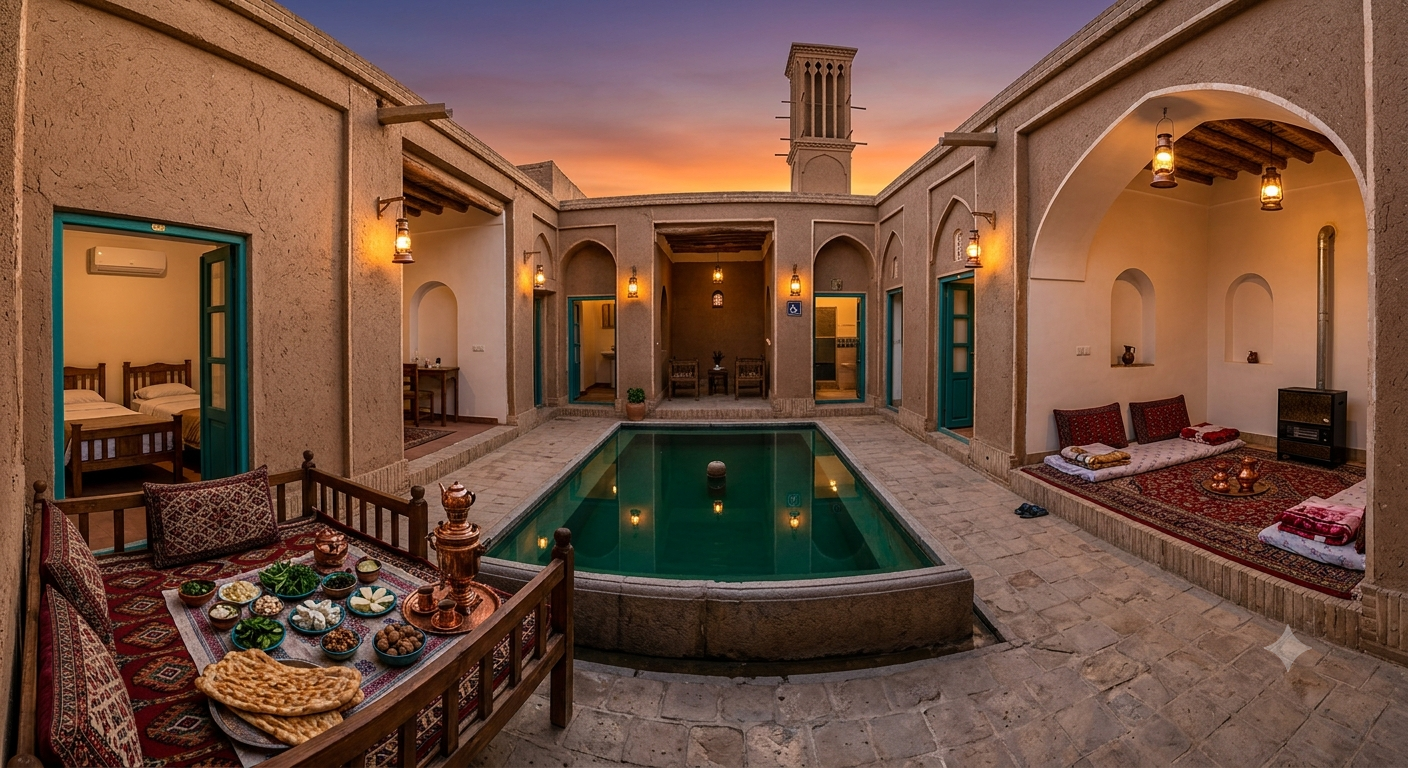
- Natural and Vernacular Materials: Sun-dried mudbrick walls radiating earthy scents, timber ceilings, central courtyards with turquoise basins, and stained-glass sash windows.
- Ecological Climate Harmony: Desert windcatchers, northern timber verandas (Telar), or stepped mountain homes constructed without disrupting nature.
- Evoking Nostalgic Warmth: Reviving memories of grandparents' traditional homes while breaking free from rigid apartment structures.
[Internal Link: Guide to Authentic Vernacular Architecture in Iranian Eco-Lodges]
4. Rejuvenating Natural Silence vs. Urban Turmoil
City hotels offer easy access to shopping centers but keep you trapped near traffic congestion, car horns, and light and noise pollution.
Soul Healing Through the Magic of Silence
Most rural eco-lodges sit on mountain slopes, desert fringes, or in dense pristine woodlands.
- Gazing at Starry Night Skies: Zero light pollution in rural settings creates unparalleled views of the Milky Way.
- Waking to Nature's Symphony: Replacing alarm clocks and street traffic with bird melodies, crisp morning breezes, and flowing streams.
- Digital Detox Opportunities: Stepping back from social media to experience true mental tranquility.
5. Directly Supporting Rural Economies and Preventing Migration
Where you choose to stay has a direct impact on the future of rural communities—an impact absent in urban hotel options.
Value Creation in Responsible Tourism
- Direct Financial Injection: Your payments flow directly into the hands of village families, farmers, bakers, and local artisans without intermediaries.
- Youth Job Creation: Creating local employment prevents rural youth from abandoning their ancestral homes for urban fringes.
- Reviving Handicrafts: Increased demand for authentic souvenirs breathes new life into endangered traditional arts.
[Internal Link: The Role of Eco-Lodges in Revitalizing Rural Culture and Economies]
6. Unique Experiential Activities and Local Tours
In hotel complexes, leisure is often limited to pools, gyms, or city tours. In contrast, rural activities are hands-on, immersive, and active (Experiential Tourism).
Experiences Only Rural Living Delivers
- Participating in Daily Rural Life: Picking fresh orchard fruit, milking farm cows, or baking flatbread in traditional clay ovens.
- Trekking Off-the-Beaten-Path Trails: Nature walks guided by local hosts who know every hidden landmark in the area.
- Traditional Evening Gatherings: Live regional music performances, poetry recitations around firepits, and courtyard camaraderie.
Comprehensive Comparison Table: Eco-Lodge vs. City Hotel
| Comparison Criterion | Eco-Lodge | City Hotel |
|---|---|---|
| Ambience & Experience | Cultural, intimate, nostalgic, and experiential | Formal, administrative, modern, and luxury |
| Architecture Style | Mudbrick, timber, historic, eco-integrated | Concrete, modern, high-rise, standardized |
| Dining & Cuisine | Authentic home cooking with organic ingredients | Classic restaurant menu and international fast food |
| Geographic Location | Villages, deserts, forests, and pristine nature | City centers and main avenues |
| Community Impact | Directly empowers village economies and locals | Generates profit for corporate investors |
| Entertainment | Fireside gatherings, nature treks, folk music | Swimming pool, gym, and modern facilities |
Conclusion
Why staying in an eco-lodge differs from booking a hotel boils down to the essence and purpose of your journey. City hotels offer modern amenities, isolated privacy, and predictable comfort; however, if you wish to touch the real soul of Iran, savor organic home-cooked food, hear local legends, find peace in natural silence, and support village economies, nothing replaces a traditional village house.
This style of travel transforms you from a distant spectator into a cherished guest and participant in local life.
Take Your First Step Today!
Select your next destination, book an authentic eco-lodge, and experience a refreshing, memorable journey. If you have stayed in traditional lodges or have questions, share your thoughts in the comment section below!
Share on